
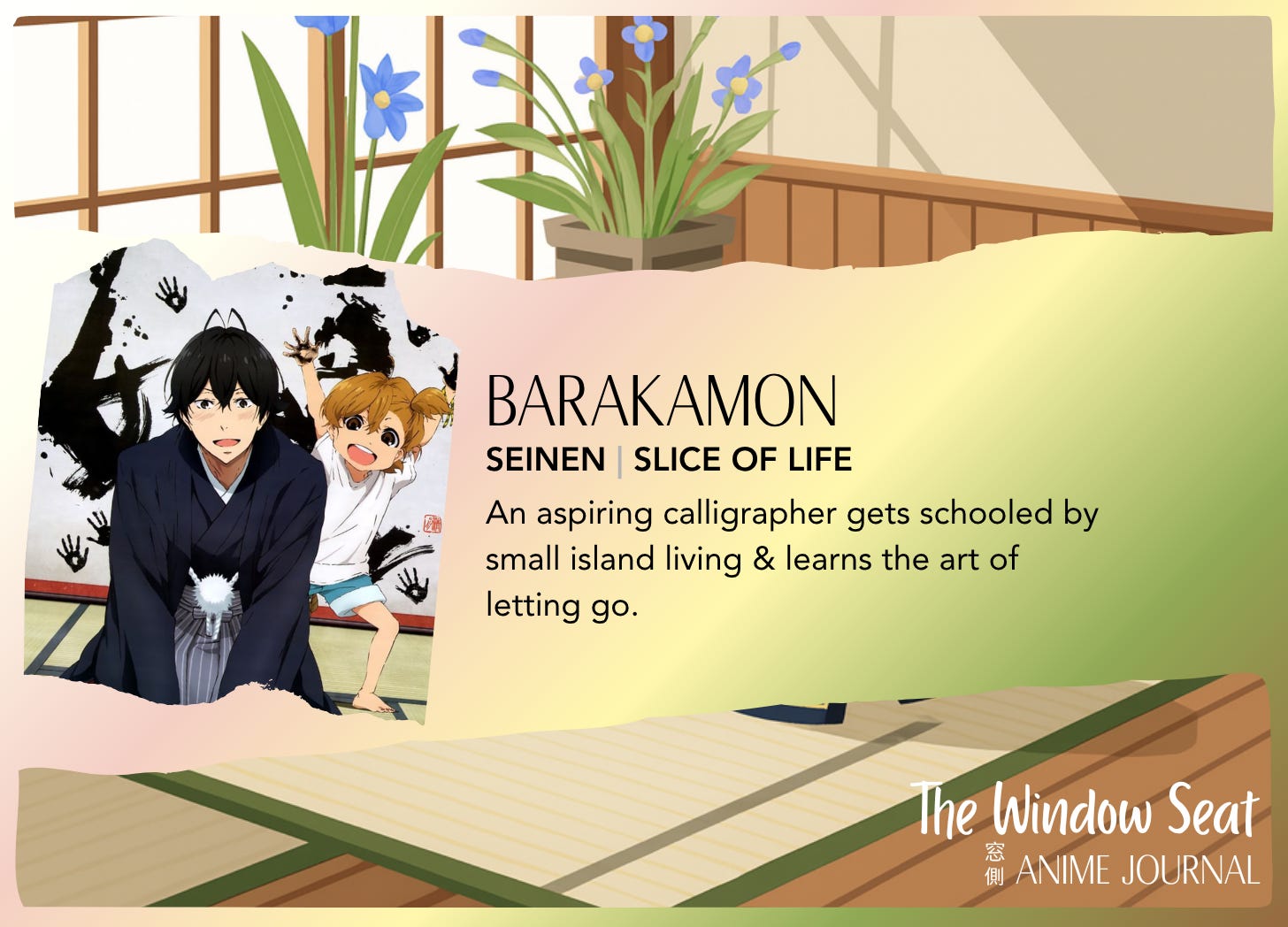
BARAKAMON
An aspiring calligrapher gets schooled by small island living and learns the art of letting go.
OVERVIEW
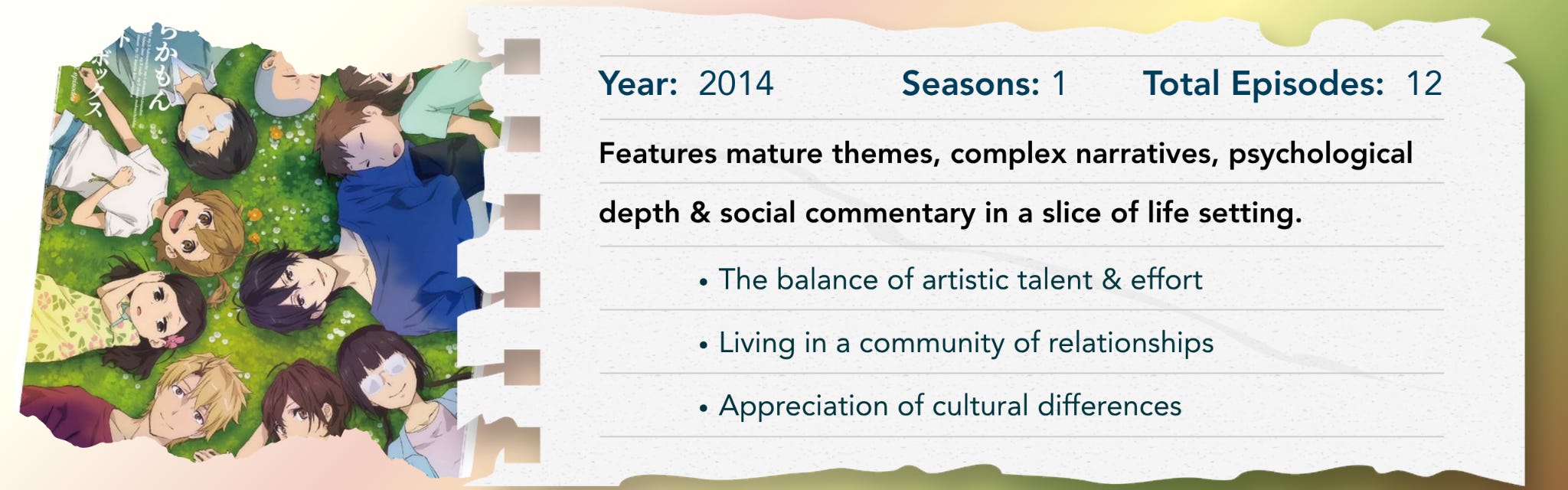
In Barakamon, an impulsive and egotistical calligrapher from Tokyo is sent to Fukue Island by his father, after he attacks a Director who criticized his work for being too boring in its over attachment to the fundamentals. From the moment Handa lands on the island, the incongruity of village life begins to wear down the guarded defenses he brought from his urban upbringing, and exacerbate his uncertainties around his artistic identity. He is inundated with the high-volume, rough-housing ways of the village youth, (including Naru, a seven year old girl who adopts him almost instantly), and is forced to shed his tight-laced conservative approach to both life and calligraphy.
Barakamon is a story where a singular talent meets the influence of community, as Handa learns a new pace of life and the importance of relationships when you depend on others in your environment. Despite coming to the island to improve his calligraphy, he increasingly sets aside writing practice to spend time with the island’s children and teenagers, who provide him with an extensive list of “first” experiences and opportunities to be amazed by nature. As he goes from feeling exiled to being embraced by his new community, the transformative effects expand like ripples into his friendships and familial relationships, his standing in the calligraphy world, and his personal identity as an artist.
ANIMATION STYLE
Barakamon is a realistic, “slice of life” anime that showcases the unique pace and unsophisticated charm of a small community on Fukue Island, including plenty of rough and tumble interactions with children, injurious mishaps by Handa, and moments of sweet generosity from the elders. In true form to this genre, Barakamon relies more on the growth of relationships between the characters than any particular plot development. Each episode includes a range of short vignettes that enable the sun-drenched languor of the island to pull you into days of play and small adventures.
However, the pacing is by no means slow, as Naru sets the speed at continuous movement with her boundless energy. Add in a couple of teenagers and a range of plentiful insects, and you will be right there with Handa struggling to keep up. You will feel his tumultuous emotional ups and downs with him; but even more so, you feel joy and satisfaction when you see him laughing and shouting as the spontaneous new style of calligraphy emerges from his brush onto the canvas.
Barakamon is a consistently ranked favorite of “slice of life” anime lovers!
TARGET AUDIENCE
The target audience for Barakamon likes realistic stories that are relationship-driven, including “fish out of water” situations, friendships across wide age ranges, and questions about talent and success. Fans of Barakamon would be described as thoughtful, warm-hearted and humorous, who love calligraphy or other artistic endeavors that require persistence and effort. They also value the perspective of children, the importance of play, and appreciate regional deviations from traditional cultural norms.
OPENING, CLOSING & MUSIC
Barakamon has a great opening sequence with music by Super Beaver that is worth watching every episode to set the mood. Check out Rashisa on your favorite music streaming!
Especially make sure to keep watching past the closing credits, as there is always an additional cute vignette at the very end of each episode.
Ready to watch Barakamon? You can find it on Crunchyroll!
SIMILAR ANIMES
For “slice of life” viewers that like the theme of a Tokyo transplant finding life lessons by engaging with a small child, Poco’s Udon World checks those boxes, while also including a charming supernatural element as well.
For viewers that want to explore the intersection of talent and tireless effort in pursuit of mastery, then the shoji players of March Comes In Like A Lion provide a range of admirable characters in a story arc that draws deep from the well of triumph over loss. And with little Momo thrown in the mix, you get that adorable toddler energy too!
If you want the same kind of friendship story across an age gap, but feel like stepping out of the lighthearted “slice of life” genre, then Dororo is the perfect dark fantasy option to explore.
QUESTIONS TO CONSIDER WHEN WATCHING BARAKAMON
Is it more important to strictly follow tradition, or is moving beyond the boundaries of tradition what makes a person a true artist?
When you move to a new place, how much should you expect to be able to keep your existing “culture” and how much should you expect to adapt?
Is being an artist about working in isolation or about engaging in the environment and community around you? Is there an ideal ratio of each you should follow?
Is any art purely “abstract”? or is all art imbued with some sense of living entities?
Source Material and Anime Production
From Wikipedia: https://en.wikipedia.org/wiki/Barakamon
Manga
The manga started with three one-shots published in Square Enix‘s Gangan Powered magazine from February 2008 to February 2009, and began serialization on the Gangan Online website on the same month; it was also serialized in parallel in the Monthly Shōnen Gangan magazine from July 2014 and finished in December 2018; it resumed for a limited time in the magazine from April to September 2023. Its chapters were collected in 19 tankōbon volumes. In North America, both the original manga and the spin-off have been licensed by Yen Press.
Anime
A 12-episode anime television series adaptation, produced by Kinema Citrus, aired from July to September 2014. The anime adaptations have been licensed by Funimation (later Crunchyroll).

The Window Seat Anime Journal publishes both spoiler-free “Snapshots”, and long essays for those who want to a deeper exploration of its themes. Make sure to subscribe and never miss a post!
You can view our entire collection of writing on our Substack website at:
The first time in life is to live in it.